


How Americans Are Feeling the Economic Effects of the War With Iran

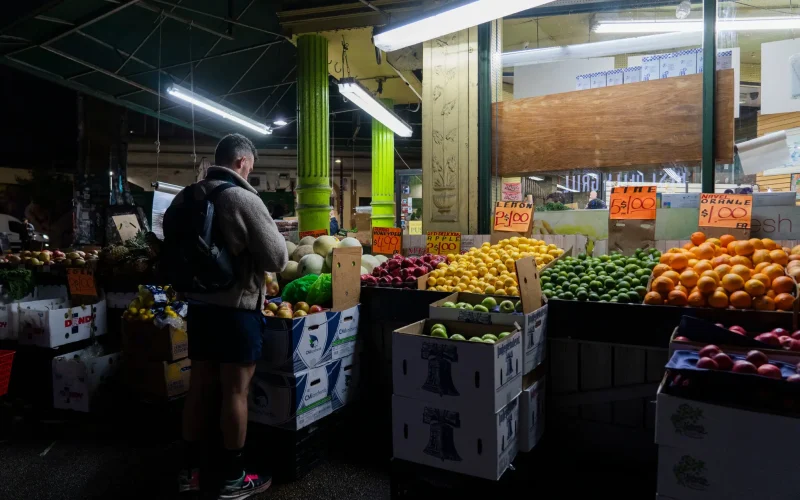
Less than two weeks after U.S. and Israeli forces attacked Iran, Americans are already feeling the effects an ocean away. Gas prices are up. Food prices are likely to increase. And volatility in the stock market could threaten retirement savings. President Trump initially said the war would last “four to five weeks,” but he has recently sent mixed signals, at times suggesting it could become a prolonged fight. If it does, the fallout for Americans could accumulate, some experts warned. Consumers could cut back on spending and businesses could stop hiring or resort to layoffs, threatening the broader economy. Here’s how Americans are most likely to feel the economic impact of the war. The average price of gasoline in the United States hit $3.48 a gallon on Monday, according to the AAA motor club. That is a nearly 17 percent increase since the first U.S.-Israeli attacks on Iran on Feb. 28. Gas hasn’t cost this much since 2024. Diesel prices have risen 24 percent since the start of the war, to nearly $4.66 a gallon. Those prices could raise the cost of everything that is shipped by truck, including Amazon packages and food, said Mark Zandi, chief economist at Moody’s Analytics. These prices reflect the surging cost of oil. The international benchmark oil price briefly jumped to almost $120 on Monday, before ending the day below $90 after Mr. Trump made remarks suggesting a shorter conflict. If the price settles at about $95 a barrel, a gallon of regular gas could hit $3.75 or $4 by next week, Mr. Zandi said. “There is already significant, serious fallout for the war,” he said. Energy prices have been spiking as the war has throttled ship traffic in the Strait of Hormuz, the narrow waterway off Iran’s southern coast where about one-fifth of the world’s oil is transported. Several refineries in the region have also shut down or cut processing, some after sustaining damage, according to Kpler, a research firm. That means they are turning less oil into fuels like gasoline, diesel and jet fuel. Mr. Trump, who campaigned partly on lowering the cost of energy, wrote on Truth Social on Sunday that higher oil prices were “short term” and “a very small price to pay for U.S.A., and World, Safety and Peace.” Rising oil and gas prices could lead to modest increases in food prices, said Miguel Gómez, director of the Food Industry Management Program at Cornell University. “Difficult to say how much, but there is going to be an impact,” he said, noting that many foods Americans buy, like fruits and vegetables, will cost more to import. If ships do not start moving through the Strait of Hormuz in the coming weeks and months, food prices could keep rising, Dr. Gómez said. That’s because the Persian Gulf is a major source of the world’s fertilizer. If ships cannot bring fertilizer to market, farmers may use less, if they can get any at all. As a result, the world will get less food, and it will cost more. With spring planting beginning around the United States, Zippy Duvall, the president of the American Farm Bureau Federation, warned in a letter to Mr. Trump on Monday that farmers were bracing for disruptions in the fertilizer supply and rising prices. If the United States does not prioritize the fertilizer supply, the country “risks a shortfall in crops,” Mr. Duvall wrote. “Not only is this a threat to our food security — and by extension our national security — such a production shock could contribute to inflationary pressures across the U.S. economy.” Air travel could cost more because of the rising price of jet fuel, Scott Kirby, the chief executive of United Airlines, said last week. While travel demand remains strong, the price of jet fuel, one of the biggest operational costs for airlines, has risen 58 percent since the start of the war, Mr. Kirby said. “It’s becoming a lot more expensive to book a ticket and a lot more difficult to find an affordably priced discounted fare,” Henry Harteveldt, an airline industry analyst at the Atmosphere Research Group in San Francisco, said on Monday. If the war continues to drive ticket prices higher, sticker shock could prompt some Americans not to fly this spring and summer, Mr. Harteveldt said. “Airlines also know that if they push airfares too high, demand will decline so they are trying to find a balance,” Mr. Harteveldt said. The surge in energy costs has rattled financial markets, leading the S&P 500 and other major stock indexes to drop. If the conflict “drags on, then the damage becomes much more serious,” Mr. Zandi said. Businesses could cut back on hiring if there is less demand. And if businesses resort to layoffs, a recession becomes more of a threat, Mr. Zandi said. Daron Acemoglu, an economist at the Massachusetts Institute of Technology, also warned that oil price increases and heightened global uncertainty could hurt the American economy. “Since the U.S. does not seem to have a clear exit strategy from Iran,” he said in an email, the effects could be “long-lasting.” Source: The Newyork Times
Total
0
Shares
Leave a Reply

Your email address will not be published. Required fields are marked *

Related Posts