




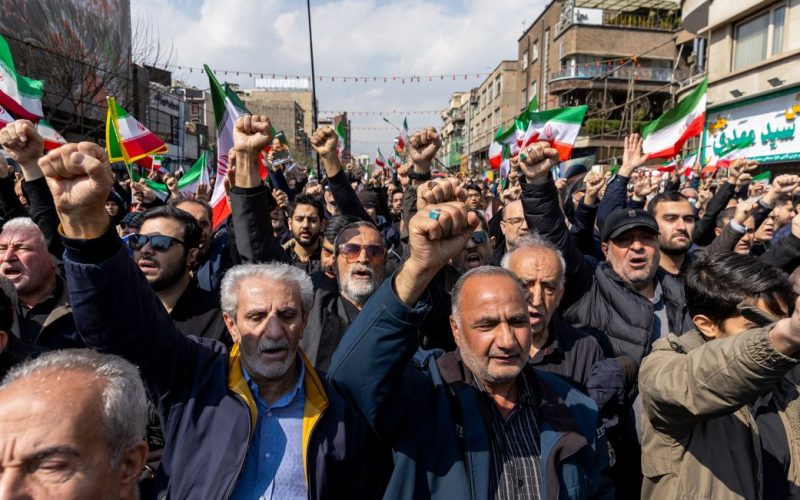
Even as Iran confronts the gravest threat to its regime yet, it is signaling a willingness to prolong its conflict with the United States and Israel in a bid to finally reshape the region in its favor.
Iran’s regime has endured devastating losses over the past few weeks, with near daily US-Israeli strikes eliminating entire tiers of its leadership and military command structure. The Iranian population, already worn down by years of economic hardship, sanctions and mismanagement, now faces the added burdens of wartime shortages, infrastructure damage and an increasingly militarized domestic environment.
Yet amid a real risk of regime collapse, the Islamic Republic’s surviving leaders have continued projecting an escalatory rhetoric.
They have repeatedly touted Iran’s capacity to endure pain, its indifference to further leadership losses and an explicit intent to drag out the war – all while wreaking havoc regionally and globally.
Despite demands by US President Donald Trump for “total surrender,” Iran’s surviving leadership has instead cast itself as having prevailed, laying out a maximalist price for peace. It has demanded a new regional “status quo,” war reparations and a shift in the decades-old alliances between Gulf Arab states and the US.
“A ceasefire only becomes logical if it guarantees that the war will not resume, not if it gives the enemy an opportunity to fix its problems, such as repairing destroyed radars or addressing shortages in interceptor missiles, only to attack us again,” said Mohammad Bagher Ghalibaf, the parliamentary speaker and one of Iran’s highest-ranking surviving officials.
“We will continue fighting until the enemy truly regrets its aggression, and until the appropriate political and security conditions are established in the world and the region,” he told Al Araby Al-Jadeed news outlet on Monday.
Iran has demanded that after the war there must be a “new protocol” for the Strait of Hormuz with consideration to “Iran’s interest” and insisted that safe passage for ships should take place under “specific conditions,” the Iranian Foreign Minister Abbas Araghchi told Al Jazeera on Tuesday.
Tehran may even go as far as demanding the unfreezing of sanctioned assets abroad or charging a toll for countries using the narrow maritime corridor that lies off the coast of Iran in international waters, analysts say.
“The Strait of Hormuz situation won’t return to its pre-war status,” Ghalibaf wrote on X Tuesday.
Related Posts

Video captures tornado ripping through Texas Walmart parking lot
AUSTIN, Texas – A vicious tornado was caught on camera wreaking havoc in a Walmart parking lot in Austin, Texas…
Rep. Brian Fitzpatrick heads to Ukraine border: ‘I will go as far as … they will allow me to go’
Fitzpatrick, who used to live in Ukraine as an FBI agent, is going on a bipartisan trip to…
Belarus plane: Lukashenko hits back at condemnation of journalist’s arrest
The president of Belarus has said his critics are “strangling” his country and waging “hybrid warfare”. Alexander Lukashenko…

How many refugees have fled Ukraine and where are they going?
More than one million civilians have fled Ukraine because of the Russian invasion, according to the United Nations…